
Spring should be the season a Palm Beach estate lawn hits peak green. If yours is doing the opposite — brown patches spreading, edges thinning, the whole property looking tired — figuring out why your St. Augustine grass is dying might be harder than the damage suggests. In recent years, Palm Beach County has earned the nickname “ground zero” for lethal viral necrosis, with the southern end hit hardest. Combine that with rising chinch bug pressure across South Florida, and a diagnosis that used to be straightforward now has several real suspects.
Five different turf threats produce nearly identical brown-patch symptoms on St. Augustine grass in Palm Beach, and misdiagnosis is the most expensive mistake in turf management — the wrong treatment doesn’t just fail, it can make the damage worse. Here’s how to tell these threats apart, and what to ask your landscape team so you catch them early.
Key Takeaways
- Five Palm Beach turf threats produce nearly identical brown-patch symptoms: lethal viral necrosis, chinch bugs, large patch fungus, take-all root rot, and nutrient deficiencies.
- The pull test and the pattern of damage are the two fastest field diagnostics for separating the five.
- Treating the wrong cause wastes money and can accelerate damage: extra water worsens fungal disease, and fungicide does nothing for a viral or insect problem.
- Specific questions about sanitation, soil testing, and pest monitoring separate a landscape team that catches these threats early from one that reacts to visible damage.
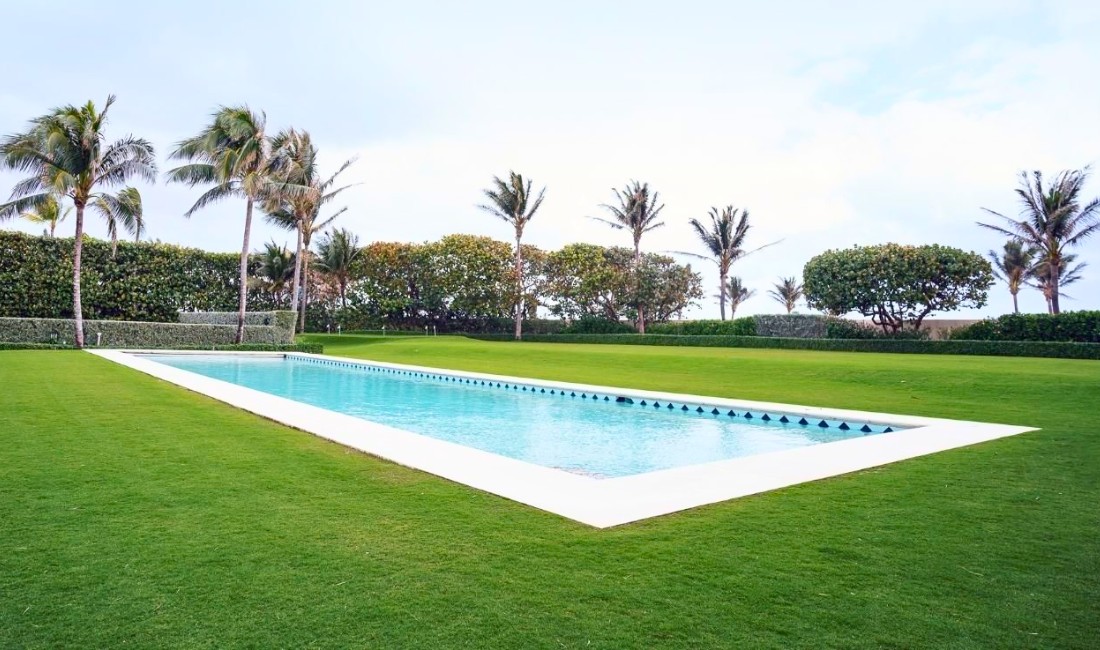
On waterfront Palm Beach properties, salt spray compounds the stress on St. Augustine grass — making early diagnosis of turf threats even more critical before damage spreads.
Why Is It Hard to Diagnose Palm Beach Turf Problems?
Palm Beach turf problems are hard to diagnose because the same brown-patch symptom can come from five different causes — and the island’s grass, soil, and climate stack the deck in favor of all of them at once.
Floratam Is Vulnerable on Two Fronts
St. Augustine grass, especially the Floratam cultivar, dominates estate lawns on the island. Unfortunately, Floratam is also the primary host for lethal viral necrosis and has lost its original resistance to chinch bugs — the two fastest-spreading threats on the island.
Palm Beach’s Growing Conditions Favor Multiple Threats
Palm Beach’s alkaline, shell-based soils often push pH above 8.0, which chemically locks up iron and other nutrients the grass needs to stay healthy. Salt spray pulls moisture from the blades on waterfront properties, high humidity keeps leaves wet long enough for fungi to establish, and year-round warm temperatures mean insect pressure never pauses. Each condition favors a different threat — and they all operate at the same time.
One Symptom, Five Possible Causes
Brown patches on Floratam could be a virus, an insect, a fungus, a root rot, or a nutrient issue — and those five causes require five different treatment paths. A quick visual check almost always fails to separate them, which is why misdiagnosis is the most expensive mistake in turf management.
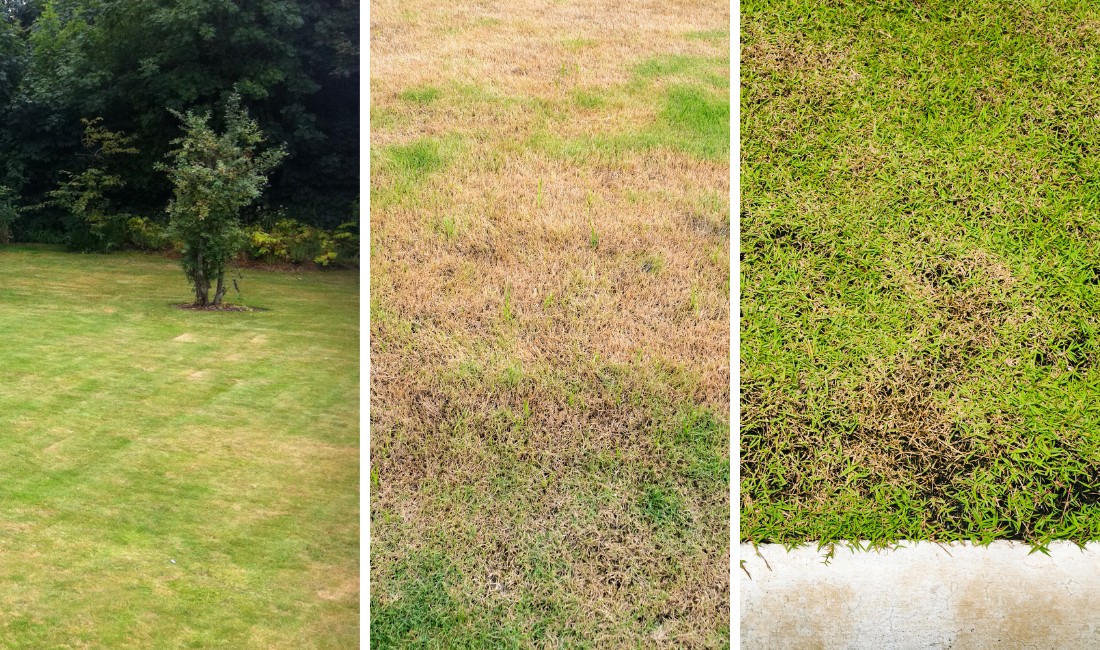
Brown patches, insect activity, and visible fungal growth all look the same — but on Palm Beach estate lawns, the wrong diagnosis costs time, money, and often the lawn itself.
What 5 Threats Are Killing Palm Beach Estate Turf Right Now?
Five specific threats cause the vast majority of St. Augustine grass damage on Palm Beach estates: lethal viral necrosis, chinch bugs, large patch fungus, take-all root rot, and nutrient deficiencies.
1. Lethal Viral Necrosis (LVN)
Lethal Viral Necrosis is a virus that kills only the Floratam cultivar of St. Augustine, and Palm Beach County is the most severely affected area in Florida. Caused by sugarcane mosaic virus, LVN was first confirmed here in 2014.
- Why It Matters in Palm Beach: The virus spreads through grass sap on mower wheels, blades, and decks. On an island where the same crews service multiple estates, one infected lawn becomes a source for every other lawn that crew touches.
- What’s at Stake: There is no cure. Fungicides and insecticides do nothing. Infected Floratam dies within about three years, and the only fix is to re-sod with a resistant cultivar like CitraBlue or Palmetto.
2. Chinch Bugs
Chinch bugs are Florida’s most damaging turf insect, active year-round in South Florida with peak damage occurring June through October. They feed on grass sap and inject toxins that kill the blades outright.
- Why It Matters in Palm Beach: The damage looks nearly identical to drought stress, which means it’s routinely misread — and the instinct to water more doesn’t help. Sunny edges along driveways, sidewalks, and walkways take the hit first.
- What’s at Stake: Chinch bug control is harder than it used to be. Research has documented southern chinch bug resistance across five insecticide classes, including the two most commonly used by the pest control industry. That makes early detection through regular scouting — as opposed to waiting for visible damage — the single best defense.
3. Large Patch Fungus
Large patch is a soilborne fungal disease (Rhizoctonia solani), and it’s especially problematic on St. Augustine grass and zoysiagrass — the two most common turf species on Palm Beach estates. It becomes active when nighttime temperatures drop below 80°F, which in South Florida means roughly November through May. Damaged patches continue to expand through spring until summer heat shuts the fungus down.
- Why It Matters in Palm Beach: The fungus does its best damage in exactly the conditions estate lawns often sit in — overwatered by irrigation systems, over-fertilized with nitrogen, and sitting on poorly drained soil. Leaning on more water and feed to “rescue” struggling turf actually speeds up its spread.
- What’s at Stake: Caught early, large patch is one of the more treatable threats on this list. But preventive fungicide has to be applied before the weather cools — reactive spraying in February is already behind the curve.
4. Take-All Root Rot (TARR)
Take-all root rot is a fungal disease (Gaeumannomyces graminis) that attacks grass roots rather than blades, which is what makes it so hard to catch early. The fungus favors alkaline soils, and any pH above 6.5 gives it what it needs.
- Why It Matters in Palm Beach: That pH threshold describes the majority of lawns on the island. Shell-based soils are naturally alkaline, so TARR has a permanent home-field advantage here that it doesn’t have elsewhere in Florida.
- What’s at Stake: TARR is the most commonly misdiagnosed threat on this list — it gets mistaken for chinch bugs, drought, or general “spring slump.” There’s no reliable chemical cure once it’s established. Management comes down to lowering surface pH and adjusting fertilization, which only works if TARR is correctly identified first.
5. Nutrient Deficiencies
Nutrient deficiencies are extremely common in Palm Beach because the soil composition locks up iron and other micronutrients even when they’re physically present. On high-pH soils like Palm Beach’s, iron and manganese are the most likely culprits when St. Augustine grass yellows without other symptoms.
- Why It Matters in Palm Beach: The underlying soil chemistry can’t be permanently corrected here. No amount of fertilizer helps if the soil won’t release what’s already in it, which is why standard fertilization programs often fail without a targeted iron component.
- What’s at Stake: Because the yellowing shows up uniformly rather than in patches, it gets blamed on general stress, drought, or “the lawn just needs more fertilizer.” Nutrient stress is also often compounded by coastal salt exposure on waterfront properties.
How Can You Tell These 5 Threats Apart?
You can tell these five threats apart with two quick field checks:
- Pattern of Damage: Patchy damage points to a virus, fungus, insect, or root rot, while uniform yellowing across the whole lawn points to a nutrient issue.
- Pull Test: Grab a handful of brown grass and tug. If leaf blades slip out of the stolon (the horizontal runner that connects grass blades to the root system), suspect large patch. If the whole stolon lifts with dark, rotted roots, suspect take-all root rot. If it stays rooted, the cause isn’t fungal.
Together, these two checks narrow the field in about thirty seconds. Here’s how the five threats compare side by side:
| Threat | Damage Pattern | Pull Test Result | Responds to Extra Watering? | Active Season | Treatable? |
|---|---|---|---|---|---|
| Lethal Viral Necrosis | Progressive thinning, often large areas; yellow streaks on blades | Grass still rooted | No | Year-round; worsens below 64°F | No; re-sod required |
| Chinch Bugs | Irregular patches along sunny, dry edges (driveways, sidewalks) | Blades and roots intact | No (looks like drought) | Year-round; worst June–Oct | Yes, but insecticide resistance is growing |
| Large Patch Fungus | Circular patches with darker edges | Leaf blades slip easily from stolon | Worsens with water | Nov–May | Yes, with preventive fungicide plus watering/fertilizer adjustments |
| Take-All Root Rot | Irregular patches; slow spring green-up | Whole stolon lifts; roots dark and rotted | No | Spring–summer | Limited; managed with soil pH and fertilizer adjustments |
| Nutrient Deficiency | Uniform across lawn | Normal | No | Anytime; worst cool/wet | Yes, with foliar iron sprays or targeted soil amendments |
What Should You Ask Your Landscape Team?
The right questions will help you determine whether your landscape team is equipped to catch these five threats early:
- Does your crew sanitize mowing equipment between properties? Given how LVN spreads, this is the single biggest vector for equipment-transmitted disease on the island. The right answer is yes, with a specific protocol.
- When was the last professional soil test on this property? Nutrient deficiencies and take-all root rot are both soil-driven, and Palm Beach soils shift over time. A team that can’t tell you when the last soil test happened is treating symptoms blind.
- What’s your pest monitoring schedule? Chinch bugs are caught by scouting, not by waiting for visible damage. By the time patches are brown, the infestation has already spread. The right answer includes a regular inspection cadence, not just reactive treatment.
- Who handles your plant health care and how is timing coordinated with lawn care? Large patch fungicide, for example, needs to go down at the end of October to prevent winter infection. Reactive spraying in February is already too late.
While these four questions don’t replace expertise, they give you an idea of whether your current team operates with the rigor a Palm Beach estate lawn needs. That kind of consistent professional oversight is what keeps small problems from becoming full re-sod projects — and it’s built into how Coastal Gardens approaches turf management services for the estates we manage.
Frequently Asked Questions About Palm Beach Turf Threats
Could the brown patches in my lawn be something other than these 5 threats?
Yes — dog urine, herbicide drift, irrigation dead zones, and winter dormancy can all cause lookalike damage. If the pattern doesn’t match any of the five threats above, a soil test and a site walk-through will usually identify the real cause.
How often should I have my Palm Beach lawn soil tested?
For estate properties, every 12 to 18 months is a reasonable baseline, with extra testing after any major landscape work or suspected disease outbreak. Soil chemistry on the island shifts more than people expect, and a test is inexpensive relative to what it tells you.
Is zoysia a better alternative to St. Augustine grass for Palm Beach estates?
Zoysia isn’t susceptible to lethal viral necrosis and handles foot traffic better, making it worth considering for high-use areas. But it’s slower to establish, more expensive to install, and has its own management needs — so it’s a property-by-property decision.
How much does it cost to re-sod a Palm Beach estate lawn?
Pricing varies widely based on square footage, cultivar choice, site prep needs, and whether you’re patching versus replacing the whole lawn. A site assessment gives you an accurate number and often reveals whether partial re-sodding can extend healthy turf.
Do Palm Beach’s water restrictions affect how I should treat a dying lawn?
Yes — the South Florida Water Management District sets watering day and time limits that most irrigation systems must follow, so any treatment plan needs to work within them. Smart controllers and hand-watering exemptions can help during recovery windows, so factor compliance in from the start.
How long does it take for a damaged lawn to recover after treatment?
Recovery depends entirely on what caused the damage and how far it progressed. Chinch bug damage caught early may fill in within 4–8 weeks; fungal recovery can take a full growing season; LVN requires re-sodding — which is why accurate diagnosis changes the whole conversation.
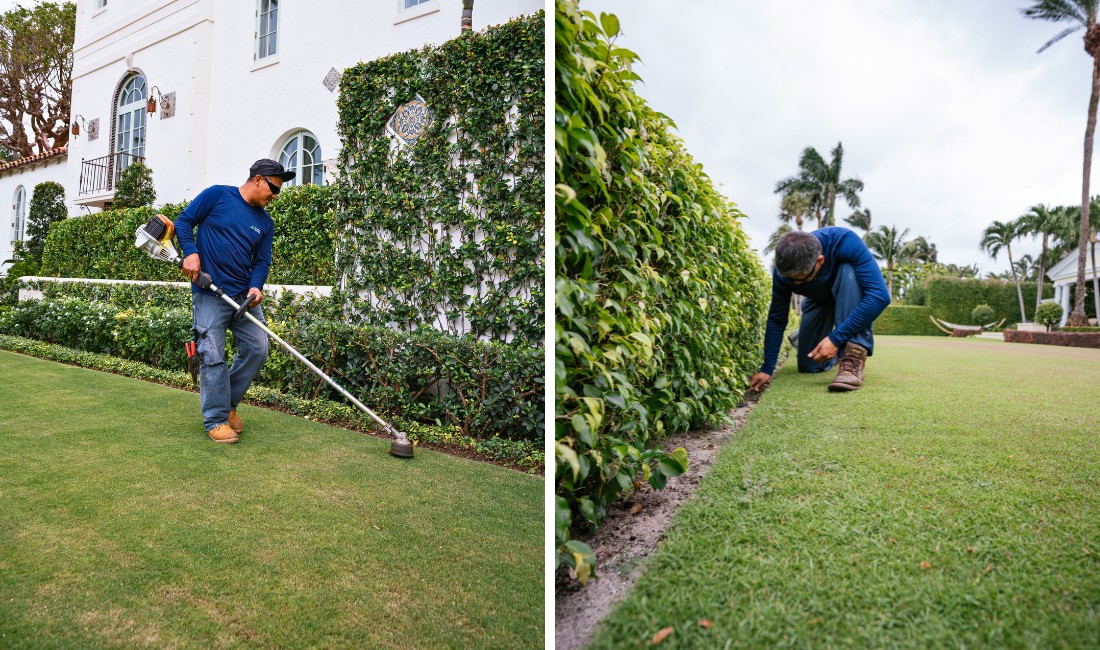
Consistent professional oversight — including equipment sanitation between properties and regular pest monitoring — is what keeps Palm Beach estate lawns ahead of turf threats, not reacting to them.
Start with the Right Diagnosis — Then the Right Treatment
A Palm Beach estate lawn that’s greening up unevenly this spring isn’t waiting for more fertilizer, another round of fungicide, or a deeper watering cycle — it’s waiting for someone to figure out which of five very different problems is actually in play. The wrong answer costs a growing season. The right answer saves the lawn.
Coastal Gardens’ turf specialists hold Certified Pest Control Operator credentials and work alongside ISA Certified Arborists on the Palm Beach team. If your lawn is thinning, browning, or just refusing to wake up the way it should, call us today at 561-308-7604 or schedule a consultation online to diagnose what’s happening and coordinate the right turf management and plant health care response for your property.
CALL US TODAY At 561-308-7604
Estate landscape Services
For Fine Properties in Palm Beach
With Coastal Gardens, you can rest easy knowing that your property is taken care of by a dedicated team of estate landscape professionals who truly care about creating and maintaining a dazzling outdoor space you can be proud of.
