
The landscape providers who kept Palm Beach estates pristine last season may not be able to deliver the same results this year – at least not at last year’s prices. Florida’s H-2A agricultural wages jumped 10% in 2025 alone, climbing from $14.77 to $16.23 per hour. Meanwhile, the state’s minimum wage reaches $15 per hour in September 2026, completing a 77% increase since 2020.
These aren’t temporary market fluctuations or arbitrary pricing decisions. They’re structural changes affecting every company serving luxury properties on the island. For estate managers sitting down with property owners to finalize contracts this January, understanding what’s behind rising landscape costs puts you in a stronger position to evaluate providers, justify necessary budget adjustments, and ensure your property receives the quality of care it deserves.
Key Takeaways
- Florida’s minimum wage has increased $1 every year since 2020 and will continue adjusting for inflation after 2026, creating predictable but unavoidable cost pressure.
- H-2A agricultural wages in Florida saw one of the steepest regional increases in the country this year, and landscape companies have no choice but to comply.
- Labor represents approximately 80% of total landscape service costs, making wage increases the primary cost driver.
- Quality providers invest in certifications, training, and year-round employment – costs that translate to reliability and expertise for your property.
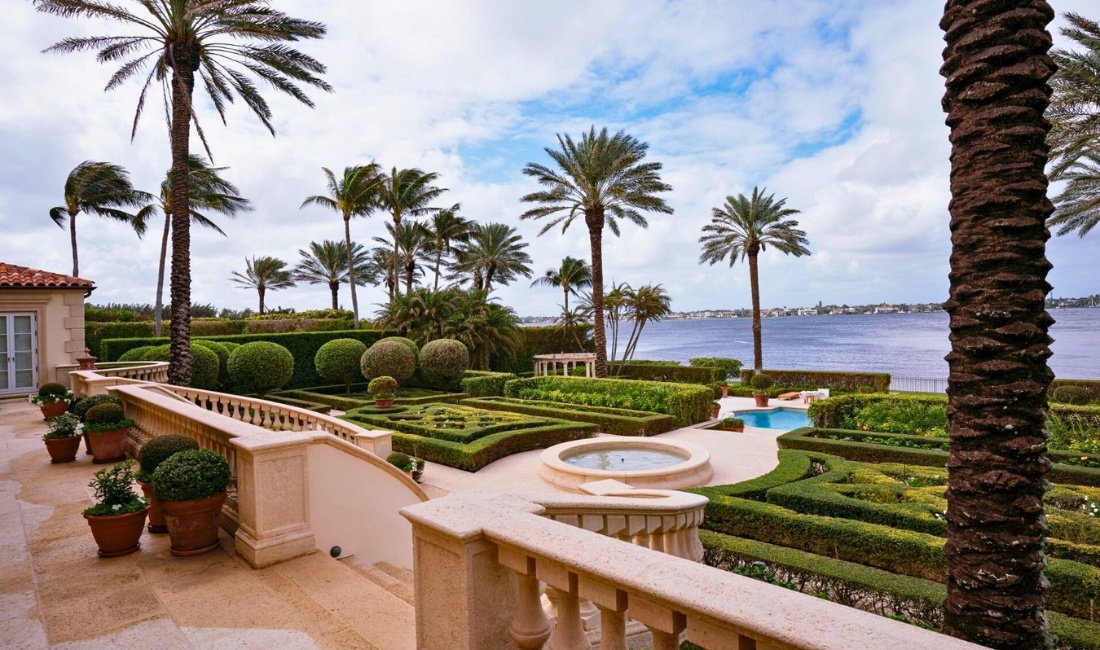
Waterfront estates require year-round precision maintenance to keep formal gardens, palms, and hedges looking pristine for the social season.
Why Landscape Service Costs Are Changing for Palm Beach Estates
Labor isn’t just getting more expensive – it’s becoming the defining factor in who can deliver estate-level landscape care. Maintaining mature palms, hedges, gardens, turf, irrigation, and PHC requires trained crews year-round, not seasonal labor. Certified Arborists, horticultural techs, irrigation specialists, and crew leads all sit well above entry-level wages, and those wages are rising across the board.
Most of the work that keeps estates looking the way they do can’t be automated, outsourced, or paused without visible decline. When wages increase, providers can’t hide it in materials, equipment, or markups – they have to reflect it in service pricing. Estate managers aren’t paying more for the same thing; they’re paying the true cost of maintaining a curated landscape with qualified people who stay long enough to know the property.
Why Landscape Providers Can’t Absorb Rising Labor Costs
Landscape providers can’t absorb rising labor costs because labor already represents approximately 80% of total project costs – there’s simply no margin left to absorb a 10% wage jump.
Unlike materials that can be sourced differently or equipment that can be financed over time, labor costs are immediate and fixed. Companies operating on typical industry margins cannot absorb increases of this magnitude without compromising service quality or crew retention.
Two factors make this math unavoidable:
1. Wage Mandates and Agricultural Labor Rates Are Increasing
Florida voters approved Amendment 2 in 2020, setting annual $1 increases until wages reach $15 per hour in 2026, followed by inflation-based adjustments.
Companies that rely on the H-2A program must also comply with the federal Adverse Effect Wage Rate (AEWR). Florida landed in a region with one of the steepest AEWR increases in 2025.
Compliance isn’t optional, regardless of what existing contracts specify.
2. The Workforce Is Shrinking While Competition for Skilled Labor Increases
The labor market compounds the problem. Hiring challenges are industry-wide – nearly 80% of landscaping companies report difficulty filling positions. Florida’s broader labor market reflects the same pressure: the U.S. Chamber of Commerce’s Worker Shortage Index shows the state has just 90 available workers for every 100 open jobs.
When providers underprice contracts to win business, they struggle to keep qualified workers, leading to turnover, inconsistency, and the kind of service disruption estate managers dread.
What Should You Expect from a Higher-Priced Landscape Provider?
Higher landscape costs only matter if the work behind them delivers. On Palm Beach, estate-level care depends on trained crews, consistent staffing, and proactive horticultural oversight – not just mowing and maintenance. Estate managers can verify value by looking for capabilities that genuinely cost more to provide:
Indicators of a high-value provider include:
- ISA Certified Arborists and TRAQ-qualified assessors
- Year-round staffing rather than seasonal crews
- Proper insurance, licensing, and safety credentials (e.g., CTSP)
- Dedicated account managers who serve as a single point of contact
- Access to quality nursery material for immediate replacements
- Familiar crews who learn the property over time
- Clear PHC (Plant Health Care) recommendations and scheduling
For Palm Beach estates, value also shows up in the details: consistent crews who understand property protocols, coordinate with household staff, and keep the landscape guest-ready without disrupting the home.
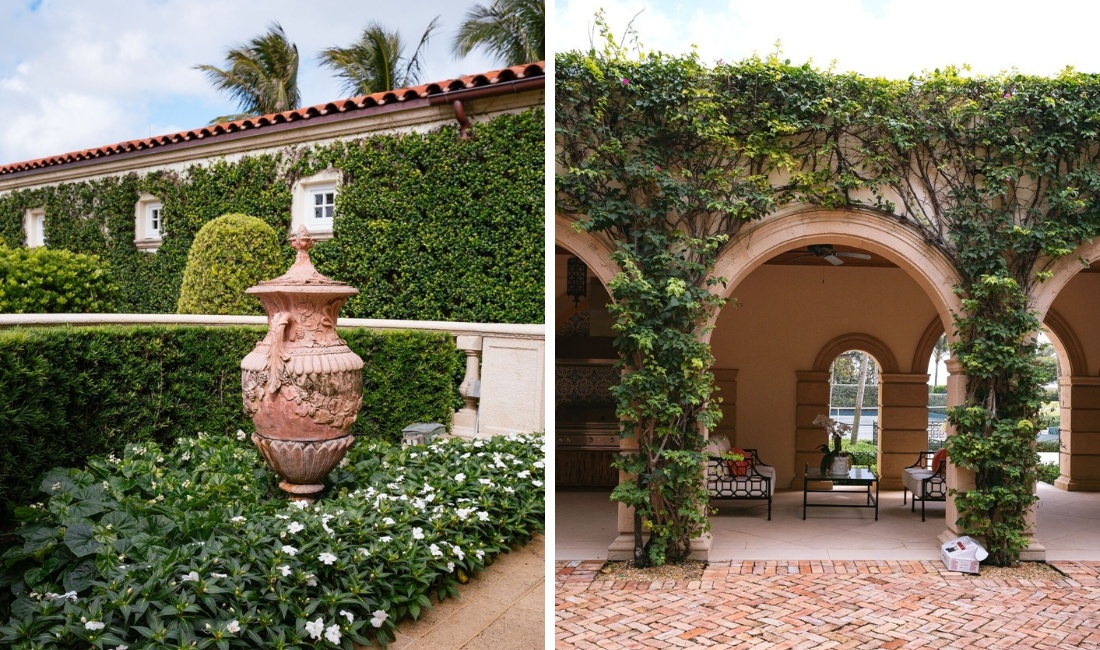
Premium landscape providers deliver meticulous detail work — from seasonal color beds to trained vines on architectural features — that lower-cost alternatives often neglect.
How Do You Know If Your Landscape Provider Delivers Value?
Price alone doesn’t indicate value – the lowest bid often signals corners being cut. Before accepting a contract increase or considering a change in providers, ask questions that reveal whether you’re paying for genuine quality or simply absorbing costs without corresponding service.
Questions to Ask Your Provider
- What certifications do your crew leads hold? (ISA Certified Arborist, CTSP, Certified Pest Control Operator credentials indicate investment in professional development)
- Are workers employed year-round or seasonally?
- How do you handle urgent requests during events or before guest arrivals?
- What’s the typical response time for issues like irrigation failures or storm damage?
- Do you have local nursery access for immediate plant replacement, or will sourcing take weeks?
Red Flags That Signal Cost-Cutting
Watch for these warning signs that a provider may be raising prices without maintaining quality:
- Different crew members on your property each visit
- Inability to explain what credentials their team holds or why they matter
- No dedicated point of contact – you’re routed to whoever answers
- Reactive approach only, with no proactive monitoring for pest issues, irrigation problems, or plant health concerns
The right questions help distinguish between providers raising prices to maintain quality and those raising prices while quality declines.
Frequently Asked Questions About Rising Landscape Costs in South Florida
How does Palm Beach’s social season affect landscape service pricing?
The November-April social season creates peak demand for landscape services in Palm Beach. Properties hosting events require more frequent maintenance, urgent response capabilities, and flexible scheduling – all of which increase operational costs for providers serving luxury estates during this period.
Should I lock in a multi-year landscape contract to avoid annual price increases?
Multi-year contracts can provide budget predictability, but ensure they include reasonable annual adjustment clauses tied to wage indices. Contracts with no escalation may encourage providers to reduce service quality over time as their costs rise.
How do landscape costs in Palm Beach compare to other Florida markets?
Palm Beach commands premium pricing due to estate scale, year-round perfection standards, specialized expertise requirements, and the social season’s demanding schedule. Industry estimates suggest costs typically run 20-40% higher than South Florida residential markets for comparable service quality.
What happens if my landscape provider can’t find enough workers?
Understaffed providers typically extend time between visits, rush through tasks, or send inexperienced crews. For luxury properties, this means missed details, delayed responses to problems, and inconsistent quality – issues that become visible during the season when it matters most.
Are landscape cost increases expected to continue beyond 2026?
Yes. Florida’s minimum wage will adjust annually for inflation, and H-2A wages are recalculated yearly based on farm labor surveys. Structural labor shortages and competition for workers suggest continued upward pressure on landscape labor costs.
How can I reduce landscape costs without sacrificing quality?
Focus on efficiency rather than cutting services. Consolidate vendors where possible, optimize irrigation to reduce water waste, choose climate-appropriate plants that require less intensive care, and work with your provider to identify maintenance tasks that can shift to off-peak scheduling.
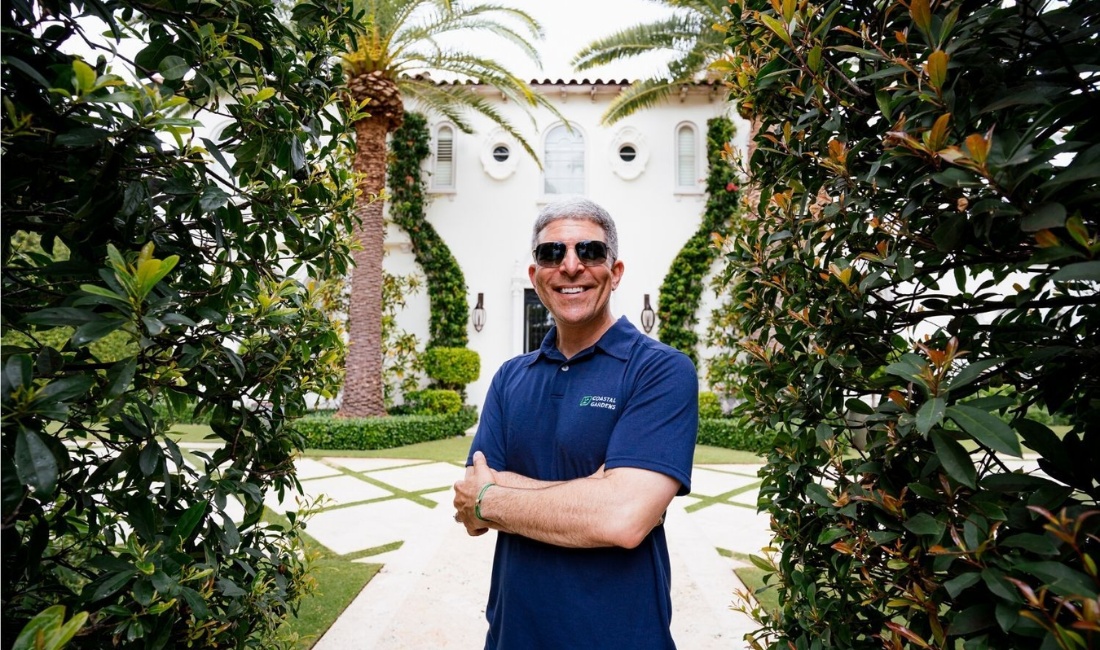
Get Expert Guidance on Your Estate’s Landscape Investment
The landscape providers who deliver pristine results aren’t the ones cutting costs to win contracts – they’re the ones investing in the credentials, crews, and reliability that luxury properties demand. Those investments cost money, and the providers who make them charge accordingly.
Rising costs aren’t going away. The question is whether your property receives value that justifies what you’re paying: credentials you can verify, crews who know your grounds, and response times that hold up when you need urgent service before an event or after a storm.
If you’re evaluating estate landscape management for your Palm Beach property or preparing for budget conversations with property owners, contact Coastal Gardens; we’d love to discuss what comprehensive care looks like. Call us at 561-308-7604 or request an estimate online to get started today.

CALL US TODAY At 561-308-7604
Estate landscape Services
For Fine Properties in Palm Beach
With Coastal Gardens, you can rest easy knowing that your property is taken care of by a dedicated team of estate landscape professionals who truly care about creating and maintaining a dazzling outdoor space you can be proud of.
